Volunteer reviewers
These pages need human eyes
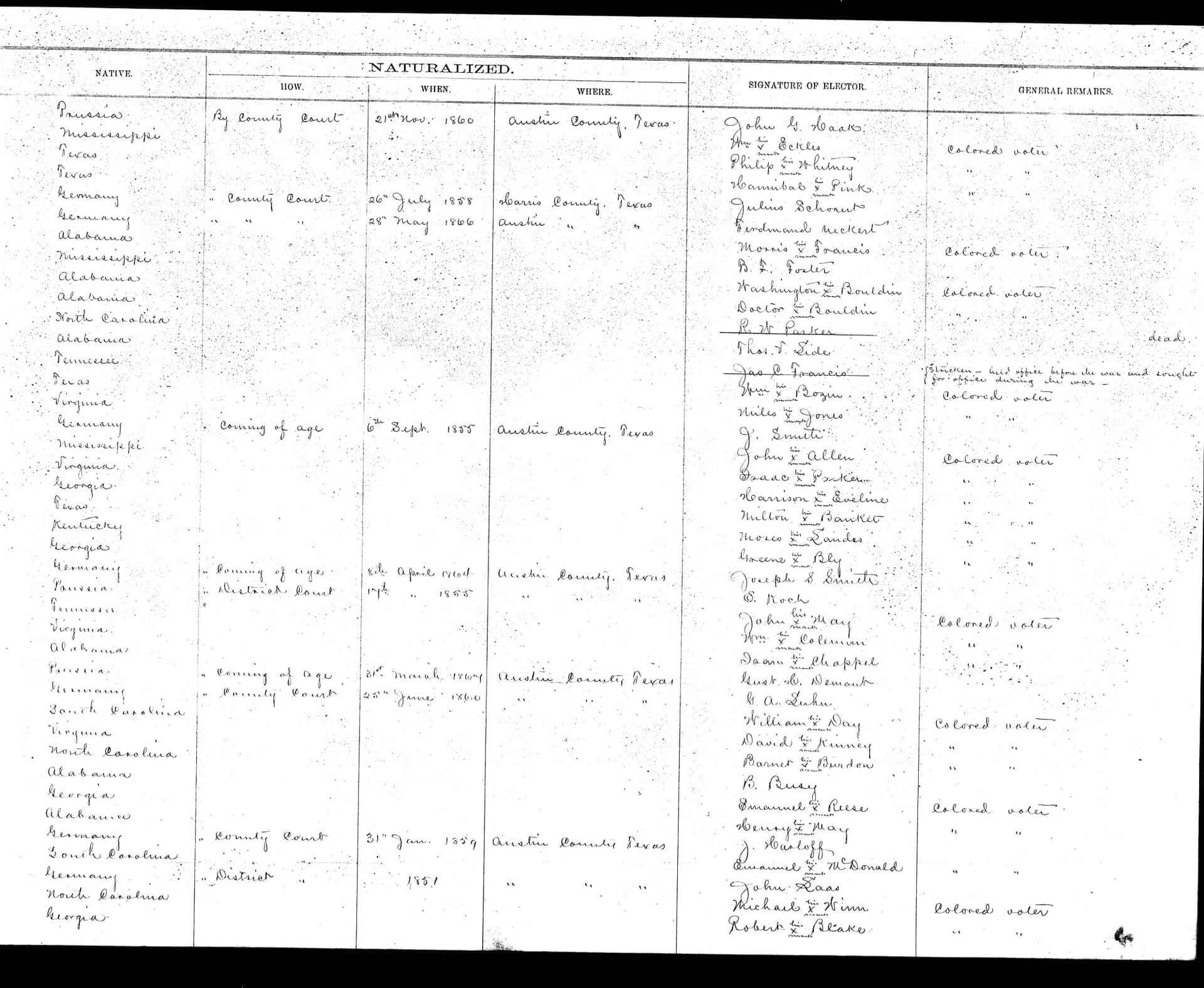
In 1867–1870, boards of registrars wrote 140,073 Texans into handwritten ledgers, county by county across all 125 of them — 50,000+ of them identified as freedmen, many registering to vote for the first time. Those ledgers are digitized, but only thinly indexed: the public indexes give a name, a date, a residence, and a birthplace, and much of the rest has never been transcribed.
No machine reads this handwriting reliably. Every column we recover — how long someone had been in Texas, in the county, in the precinct — is a person’s movement made visible, and it takes a reader to recover it.
What reviewing involves
It happens in your browser, on your own schedule. There are no fixed hours and no minimum — a single page spread is a real contribution.
1.Sign up and train
We send an invitation by email. A guided walkthrough on a practice page teaches you the register's columns and the review tools — nothing you touch during training reaches the real data.
2.Claim a page spread
Take one two-page spread from the shared queue whenever you have time. It's yours while you work on it, and it returns to the pool on its own if you step away for a few hours.
3.Read the page against the transcription
Compare the scanned ledger to what the machine transcription and the State Archives index say. Correct what's wrong, fill in what's blank, add people the index missed, and flag anything that doesn't add up.
4.Save — an admin publishes
Your work is staged, not published. A project admin approves it before it reaches the public dataset, so an honest mistake is never permanent.
The tool you’d be working in
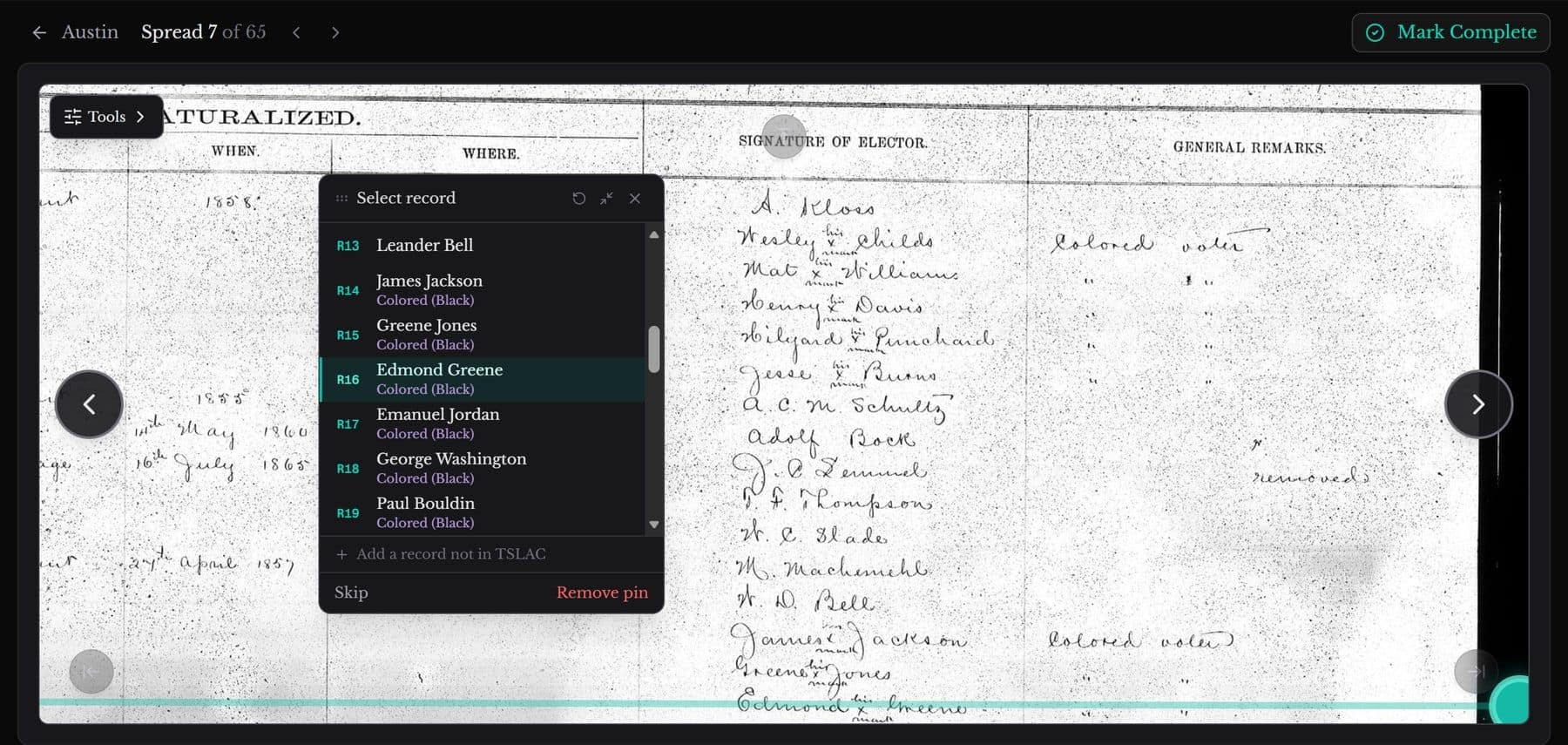
The scan fills the screen. You drop a pin on a line, say which registrant it belongs to, and correct what the machines got wrong — one spread at a time, with the page in front of you.
Sign up to review
Tell us where to send your invitation. We read every sign-up and invite in batches, so give us a little time to come back to you.